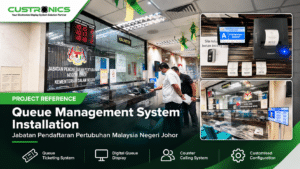
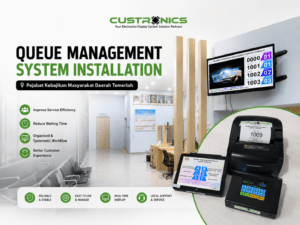
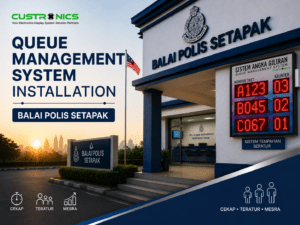
In many service environments, long queues and disorganized processes can slow operations and impact customer satisfaction. Businesses are increasingly adopting a queue management system to improve workflow, reduce waiting time, and deliver a smoother service experience.
Beyond customer convenience, these systems play a critical role in improving overall operational efficiency.
What Is a Queue Management System?
A queue management system is a structured solution designed to manage customer flow from arrival to service completion.
It typically includes:
- Ticketing queue registration
- Display panels for queue numbers
- Call systems for counters
- Software for monitoring and reporting
By organizing customer flow, businesses can avoid congestion and confusion.
Reducing Waiting Time with a Queue Management System
One of the most immediate benefits is reduced perceived and actual waiting time.
A queue management system helps by:
- Distributing customers evenly across service counters
- Preventing overcrowding at a single point
- Providing clear visibility of queue progress

When customers understand how long they need to wait, the experience feels more controlled and less frustrating.
Improving Staff Productivity and Workflow
Operational efficiency is not just about customers. It also affects internal performance.
With a queue management system:
- Staff can focus on service instead of crowd control
- Workloads are distributed more evenly
- Idle time and bottlenecks are reduced
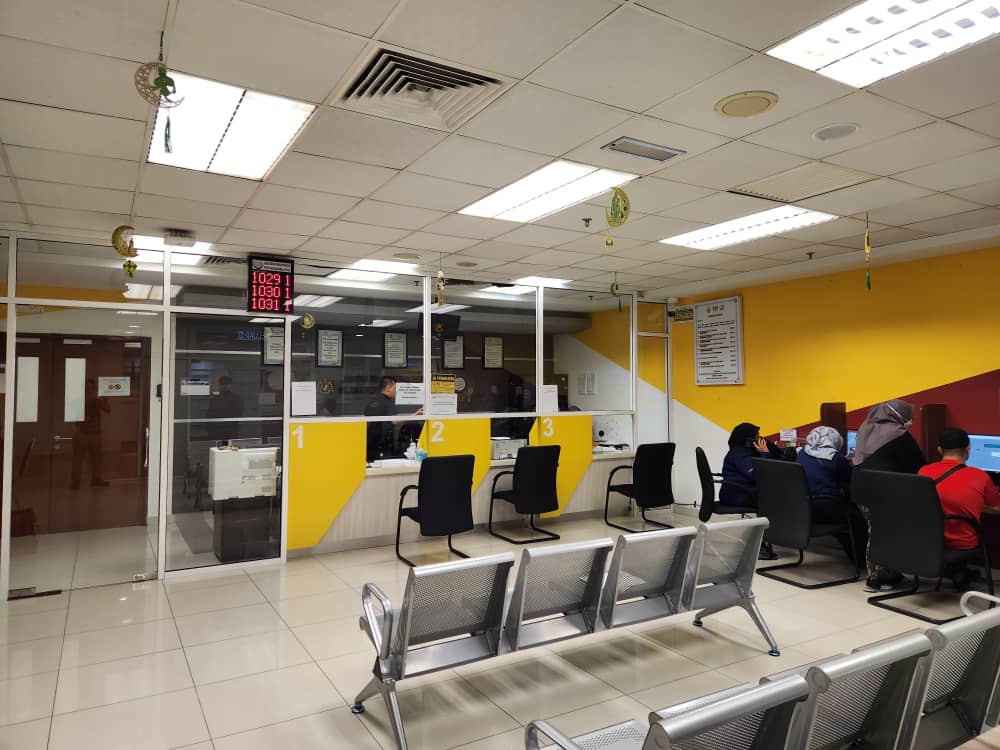
This creates a more structured and predictable workflow.
Enhancing Service Accuracy and Organization
Manual queue handling often leads to errors, skipped turns, or confusion.
A queue management system ensures:
- First-come, first-served consistency
- Clear queue tracking
- Reduced human error
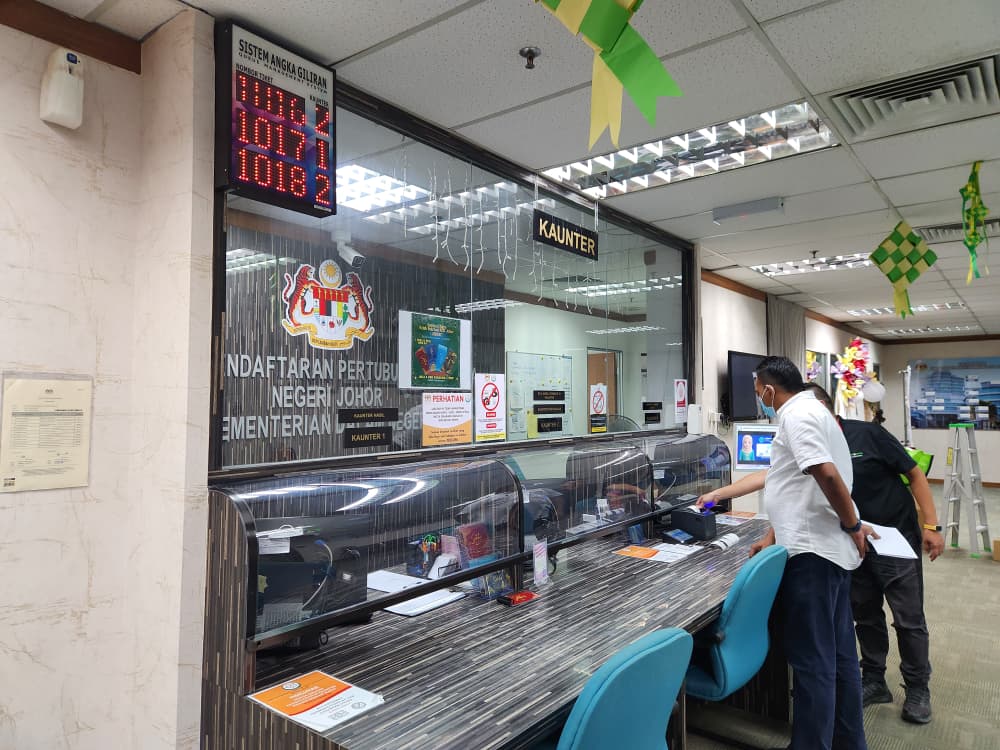
This level of organization improves both service quality and operational reliability.
Real-Time Monitoring for Better Decision Making
Modern systems provide data that can be used to optimize operations.
Businesses can monitor:
- Peak service hours
- Average waiting times
- Counter performance
With insights from a queue management system, management can make informed decisions on staffing and resource allocation.
Creating a Better Customer Experience
Efficiency and customer satisfaction are closely connected.
A well-implemented queue management system:
- Reduces stress in waiting environments
- Improves transparency
- Enhances overall service perception
This leads to better customer retention and stronger brand trust.
Applications Across Different Industries
Queue systems are widely used in:
- Government service centres
- Hospitals and clinics
- Banks and financial institutions
- Retail service counters
Each environment benefits from improved organization and efficiency through a queue management system.
Operational efficiency is built on structure, clarity, and consistency. A queue management system helps businesses achieve all three by organizing customer flow, improving staff productivity, and reducing inefficiencies.
If queue flow is becoming difficult to manage, it may be time to rethink how your service process is structured.
Review how your current setup handles peak hours, waiting time, and customer movement and see where improvements can be made. Check out our queue management system solutions in HERE and HERE.